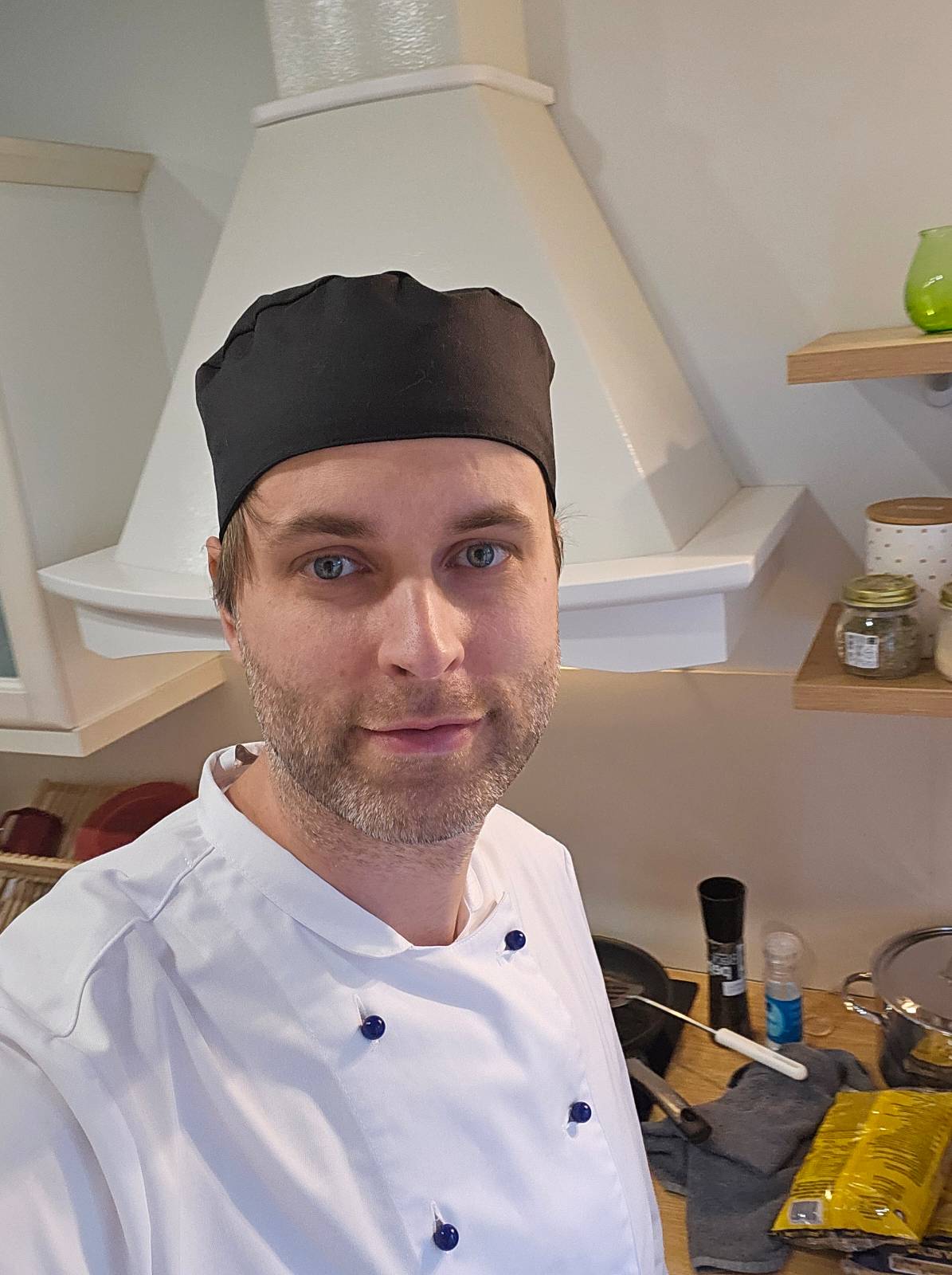
Life is too short to eat shitty food.
That may sound blunt, but it is one of the simplest reasons I care about baking at all.
I have always been a home cook. In the last few years I have taken that much more seriously. My background is in IT, and by nature I tend to think in systems. I look for inputs, outputs, failure points, patterns, and repeatability. That way of thinking does not switch off when I step into the kitchen. If anything, it gets stronger there.
I have spent the last years sharpening how I think about food through practice, courses, travel, observation, and a lot of reading. So this is not coming from a place of casual internet fascination. It is coming from a place of wanting to understand what is actually happening, why it is happening, and what part of it can be controlled in a real kitchen.
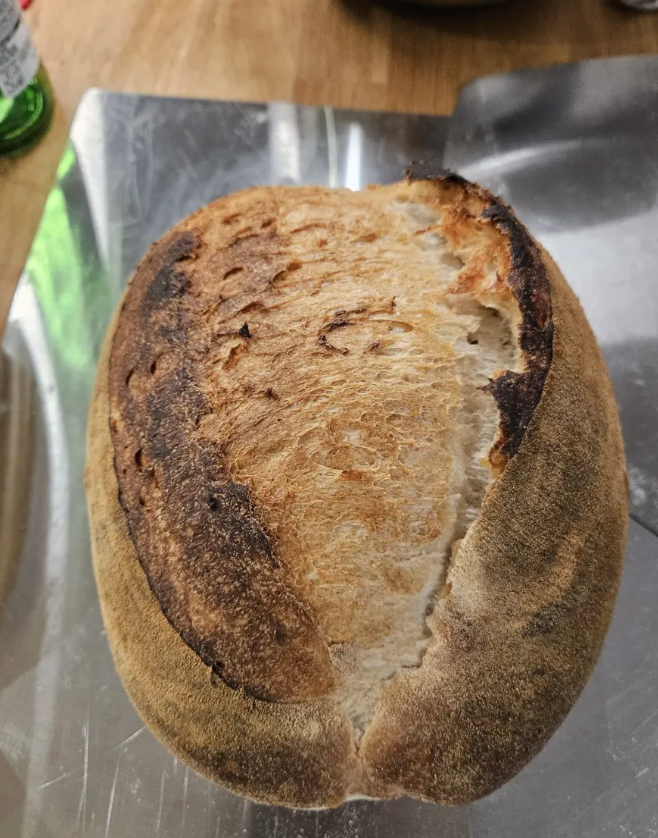
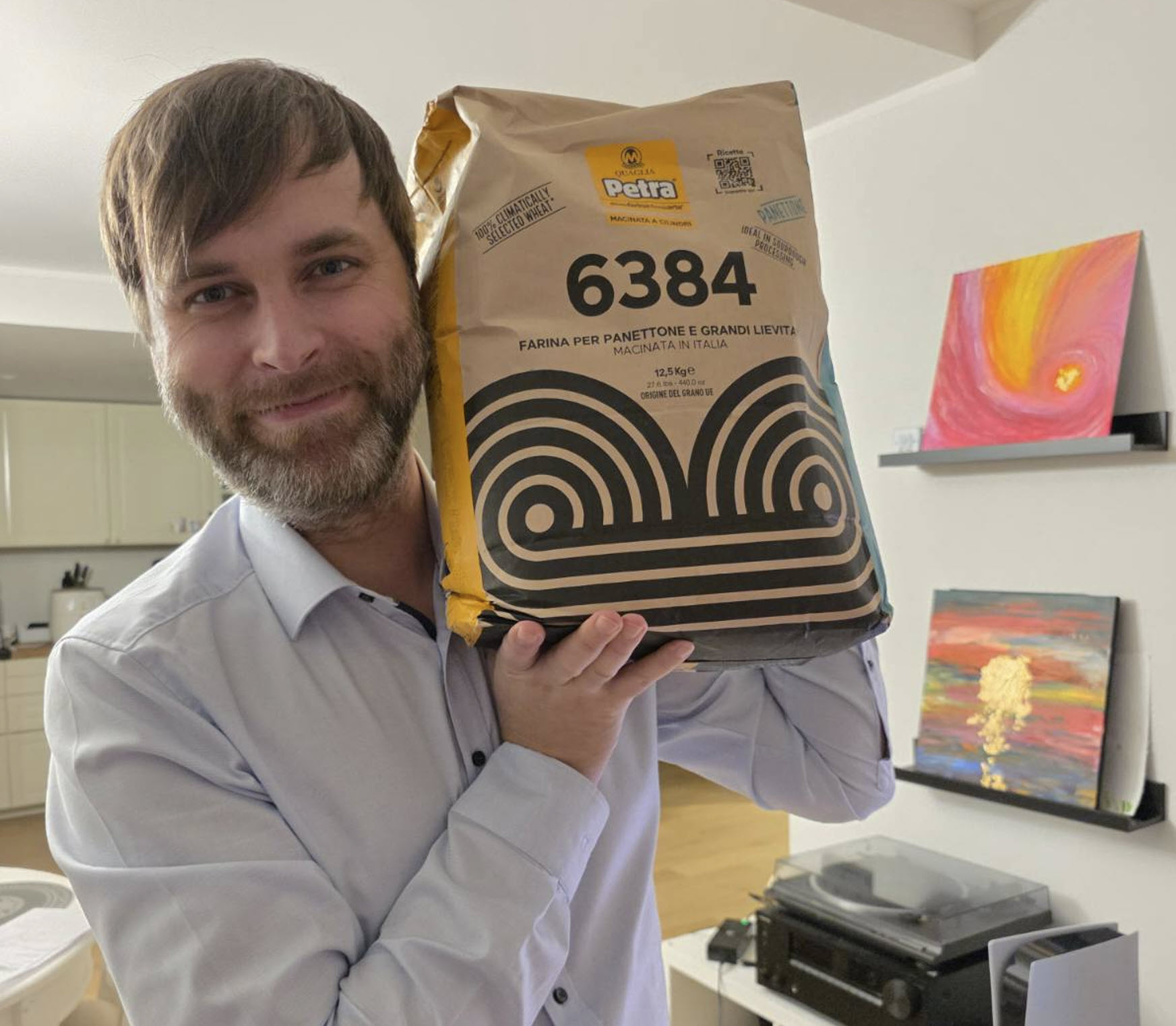
My own sourdough started much more simply. It started from curiosity. In the beginning it was a lot of experimenting, watching, feeding with different flours, and trying to understand what the culture was doing. I was not tightly locked into some sacred schedule from day one. I also like testing flour. I like seeing what changes when the flour changes. I keep real range at home, including Petra flours from Molino Quaglia (they label by numbered codes like 6384, 5010, Petra 3, and 5037) and different Caputo flours (Nuvola, Nuvola Super, Pizzeria, Integrale, Classica, Saccorosso, Semola, Tipo 1, Alba, and Pasticceria), because generic flour talk does not mean much to me unless I can compare behavior for myself.
That early phase was messy in a normal way. Curiosity, inconsistency, partial understanding, trial and error. But it was not a total failure. I made several successful breads before it stalled, including one of those early loaves that crackled and sang on the table as it cooled. That matters because it means the subject had already started to give something back before it broke apart. What stopped it was not some grand technical collapse. It stalled in a stupidly simple way when the starter jar broke and the whole thing lost momentum. That sounds small, but it matters, because it reflects how fragile early momentum can be when you do not yet have a real system behind what you are doing.
The reason I am back at this topic now is more specific. I came back through the question of the so-called stiff starter, or more precisely lievito madre. And this time I was not interested in vague answers. I was not interested in maybe-this or maybe-that explanations if nobody could say what they actually meant. I wanted real answers, or at least better questions. That is a big part of why this turned into a much more serious research process around sourdough, lievito madre, terminology, flour, temperature, timing, control, and what all these people online are actually talking about when they use the same words for different things.
Lievito madre did not just look like a new starter variation to test. It reopened the whole subject. It forced me back into questions about hydration, flour strength, management, timing, and what people even mean when they throw around words like stiff starter as if everyone were describing the same thing. The more I looked, the less believable one-size-fits-all sourdough advice became. A basic wheat loaf, a rye sourdough bread, and a sourdough panettone do not ask the same things from the baker, the flour, or the starter, even if people online love talking about them as if they all belonged to one clean method.
That is also where language starts to matter
When I say lievito madre, I do not mean just any thicker starter. I mean a way of keeping and managing a culture. That wider system can include more liquid and more solid forms, but that does not mean every starter that is thicker than 100% hydration suddenly becomes the same thing.
And when I say stiff, I do not mean anything below liquid. I definitely do not mean 70% hydration. For me that is too soft for the word to stay useful. If I want the language to stay honest, then around 45 to 55 percent is where stiff starts to make real sense. Around 60 to 75 percent I would much rather say firm. That may sound like a technical distinction, but it matters because sloppy terminology creates sloppy thinking, and sloppy thinking is one reason people keep talking past each other in sourdough discussions.
This is also why the usual sourdough framing no longer works for me
For a long time I treated sourdough like a formula problem. I thought that if I just learned the right feeding ratio, the right flour, the right schedule, and the right temperature range, everything would click into place. I thought sourdough was complicated, but still basically clean. I thought the answer was out there somewhere in a neat, shareable form.
I no longer believe that.
That does not mean sourdough is fake, random, or impossible to understand. It means the internet often teaches it in the wrong shape. It turns a living fermentation system into a list of tips, jar photos, and one-line answers. That is a big part of why so many people stay confused for so long.
At its core, sourdough baking is not just about keeping a jar alive. It is about managing a culture that changes with flour, water, temperature, timing, storage, and handling. People talk about sourdough as if it were one thing. It is not one thing. It is a moving system. The logic behind a wheat sourdough loaf, a rye sourdough bread, and a sourdough panettone may overlap in places, but they are not interchangeable processes.
What sourdough is not
That is why I think it is important to say clearly what sourdough is not.
- It is not one universal feeding ratio.
- It is not one perfect jar texture.
- It is not one correct flour.
- It is not one ideal room temperature.
- It is not one float test, one pH number, or one Instagram post away from clarity.
Why a basic product needs twenty ingredients
There is another reason this topic matters to me too. I keep looking at everyday baked products and asking the same question. You pick up something as basic as a cinnamon roll and suddenly the ingredient list looks like a small project of its own. Twenty ingredients. Twenty-five ingredients. At that point my reaction is simple: why? Why does this need to be in there at all?
I understand the industrial answers. Longer shelf life. Lower cost. Easier scaling. More stable mass production. But understanding those reasons does not mean I want to eat the result. A lot of those products stay on the shelf for exactly that reason.
That is also why sourdough is a useful contrast for me, even before anyone drags the conversation into health claims or digestion. At one end you have a slower and more sensitive process that demands attention, timing, and actual management. At the other end you have baking designed first around speed, shelf life, scale, and cost control. Those are not the same worlds, and they do not ask the same questions.
Where commercial yeast earns respect
This is also the point where commercial yeast deserves more respect than it usually gets in sourdough circles.
Commercial yeast dough is easier to control. That is not an insult. It is a fact. The variable set is smaller, the timing is more predictable, and the results are easier to repeat. If I want a cleaner production rhythm and more control, commercial yeast gives me that with less ambiguity. Easier does not make it inferior. It makes it easier to manage.
Sourdough is different because the system itself is more sensitive.
Where the frustration starts
Most of the frustration starts when people expect sourdough to behave like a clean formula problem. They want to ask, "How often should I feed it?" or "What flour should I use?" or "Should I keep it on the counter or in the fridge?" and get one clean answer back.
But many of those questions are incomplete before they are even answered.
- What flour are you using?
- What temperature is your culture actually living at?
- What season are you in?
- Is your kitchen stable, or does it swing with the weather?
- Are you working in a normal home environment, a more controlled setup, or something in between?
- Is it a new culture, a mature one, a weak one, or one that just came out of cold storage?
- Are you trying to maintain it, strengthen it, bake with it tomorrow, or recover it after neglect?
And when you say the fridge, what does that even mean in your kitchen? A fridge that sits steadily at one temperature is not the same thing as a fridge that drifts, runs warm, or swings around.
Without those details, the answer may sound useful while still being wrong.
This is also why people can go to a course, see a process work beautifully, come home, repeat the same steps, and then wonder why everything falls apart. The surprise is understandable, but the mismatch is real. The mixer is different. The room is different. The proofing setup is different. The flour is different. The temperature is different. Sometimes even the baker's pace through the process is different. Copying a method is not the same thing as transferring a system.
That same problem shows up all over social media
To be fair, social media is useful in one specific way. It is good for ideas. It is good for seeing what people are trying. It can push you toward questions you would not have asked otherwise.
But it also does three things very badly. It repeats wrong information with confidence. It gives methods without enough explanation. And it often makes things more complicated than they need to be.
People ask for recipes, and people hand them out quickly. But very often the flour description is weak, vague, or almost useless. You get flour grams and water grams, but not enough real information about what kind of flour is doing the work. Then someone tries to follow that recipe at home with a very different flour, gets a disappointing result, and concludes that the recipe was nonsense. Sometimes the real problem is not that the recipe was false. The problem is that it was incomplete.
This is also why generic flour labels do not impress me much. Bread flour does not tell me very much on its own. Different countries use different flour language. Different producers sell very different products under labels that sound similar. What matters more to me is how the flour actually behaves. I care more about strength, protein, and whether the flour fits the hydration, handling, and cold time I want than I do about a retail label that pretends to settle the question in one word. And even then the story is not frozen forever. Season matters. Storage matters. Batches can differ. The same flour does not always behave like a machine-stamped constant across the whole year.
Hydration is another good example. A lot of people like to flex with high numbers, as if pushing hydration upward automatically proves skill, quality, or seriousness. Sometimes it is just ego with extra water. Plenty of products do not need extreme hydration at all. The right question is not, "How high can I push it?" The right question is whether the flour, the product, the process, and the handling actually benefit from it.
People like to brag too
One of the easiest ways to do that in food is to say, "I have twenty years of experience," as if that should settle the matter. Unfortunately, that does not tell me very much on its own. Twenty years doing what exactly? Baking what? Under what conditions? With what kind of flour, temperature control, schedule, and goals? Can they explain why their process works, or are they just repeating a routine that works in their own narrow context? Time alone is not the same thing as clarity.
That is what I mean when I say too much sourdough content performs expertise instead of building understanding.
The real long game
The real long game is not the jar photo. It is management.
If I had to describe it simply, sourdough is a more time-demanding baking method. Not because the dough is magically more noble, but because the whole system asks for more ongoing attention. The biggest piece of that is the starter itself. You are not just making dough. You are also keeping a culture alive, reading it correctly, feeding it correctly, storing it correctly, and understanding what condition it is in before it ever goes into a mix.
That repeatability matters to me more now than it did at the beginning. Curiosity was enough to get me started. It is not enough if I want a process I can trust. If I am going to keep sourdough or lievito madre in my kitchen long term, then I need more than occasional success. I need something I can read, manage, and reproduce without pretending that luck and ritual are the same thing as control.
The part that is not process
At the same time, I do not want to reduce this whole subject to process management only. Part of what pulled me back in was the result itself. The first lievito madre bakes made a much stronger impression on me than I expected. The flavor felt cleaner. The overall result felt more precise. And when fresh bread or buns come out of the oven properly, it is honestly hard to put that into words without sounding dramatic. If most of your reference points are store products, then it is a completely different thing.
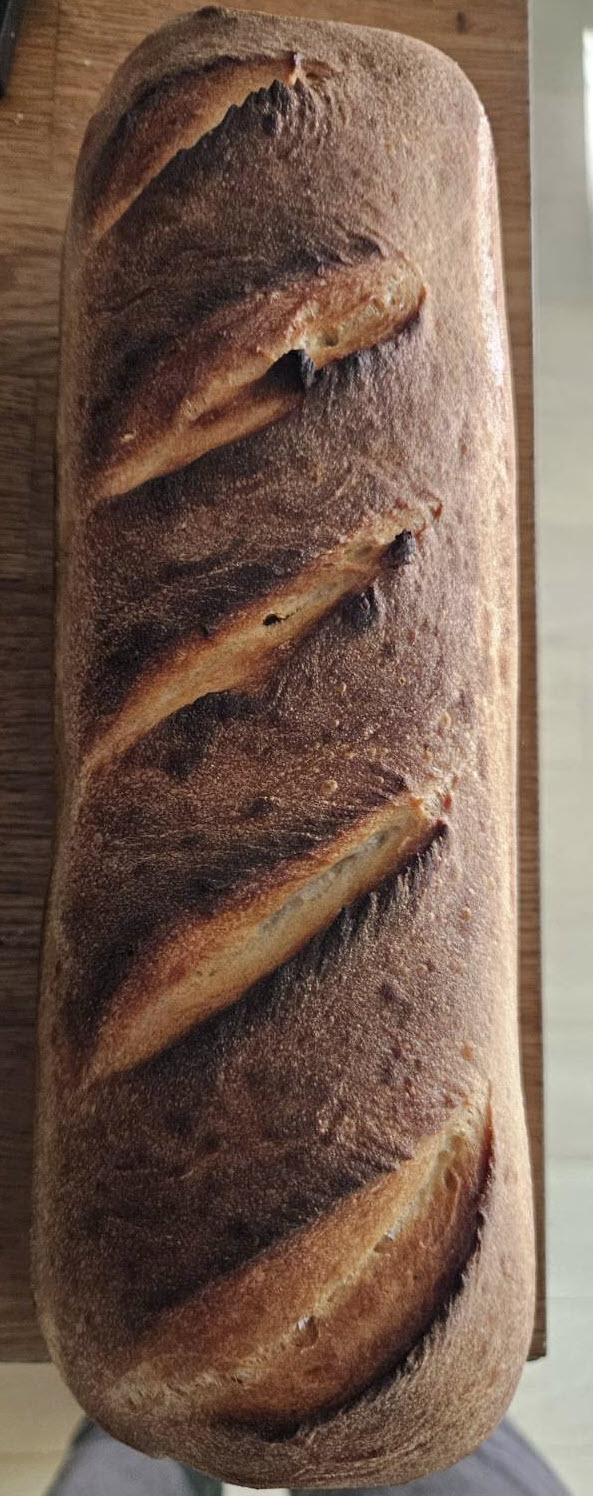
That is the part the internet often misses when it turns everything into jar photos and feeding schedules. Good baking has an emotional side too. Fresh bread and bread products made well are not just a checklist result. They have smell, heat, texture, and a kind of immediacy that industrial shelf products simply do not have.
A better frame
This is not a complete sourdough manual, and it is not supposed to be. It is the beginning of a longer series, and the point of this first piece is not to declare the final truth. The point is to put the frame in the right place first. The wrong frame wastes years. It makes people chase clean answers inside a messy system. It makes them think they are failing when they are often just asking the wrong question at the wrong level.
From here, I want to go deeper into process, flour behavior, temperature, cold storage, management, and what a system looks like when it can actually be tracked, read, and repeated in a real home kitchen. That includes the parts of the sourdough world that people often flatten into one category, from lievito madre and sourdough panettone to rye sourdough bread and long-fermented wheat doughs.
I want to start not with the best feeding ratio, the best flour, or the best jar, but with a more honest frame.
Sourdough is not a formula. It is a living system. If we want better results, we need better questions first.