One of the least useful answers in baking is still one of the most common: just use bread flour. The slightly more technical-sounding version is just use strong flour. The supermarket version is often all-purpose or general purpose flour. All of them sound practical. All of them sound like they should save time. In my experience, they usually stop the conversation too early.
That has been part of the problem for me from the beginning. Bread flour never felt clear enough to be genuinely useful. It always felt like a label that was supposed to settle the question without actually answering it. What does it mean in this country, from this mill, for this product, at this hydration, in this process? Most of the time, nobody says.
People want recipes quickly, and social media is more than happy to give them one. You get flour grams, water grams, starter percentage, salt percentage, and a hydration number that looks serious enough to be worth copying. Sometimes that is all wrapped in a short caption and a nice photo of the final loaf or pizza. The problem is not that the math is fake. The problem is that the system around the math is often missing. If someone says bread flour, strong flour, 70% hydration, and then hands you the rest in grams, that may still be a very incomplete recipe.
That matters because your normal supermarket flour may behave nothing like the flour behind that post. This is where a lot of people get disappointed. They follow the numbers honestly, and the result is weak, gummy, flat, too tight, too sticky, too dry, too slack, or just awkward to handle. Then the first conclusion is usually that they did something wrong or that the recipe was bad. Sometimes the real problem is much simpler: the recipe was built on a flour system that was never properly named.
Sometimes the flour that teaches you most is the one you bought by mistake. One of the clearest examples I have had came from Caputo Tipo 1. I had meant to order something else, and the mistake turned out to be one of the best thin, crisp pizza flours I had used. That stayed with me because it made the whole point hard to ignore. The flour label had not answered the question. The dough and the final product had.
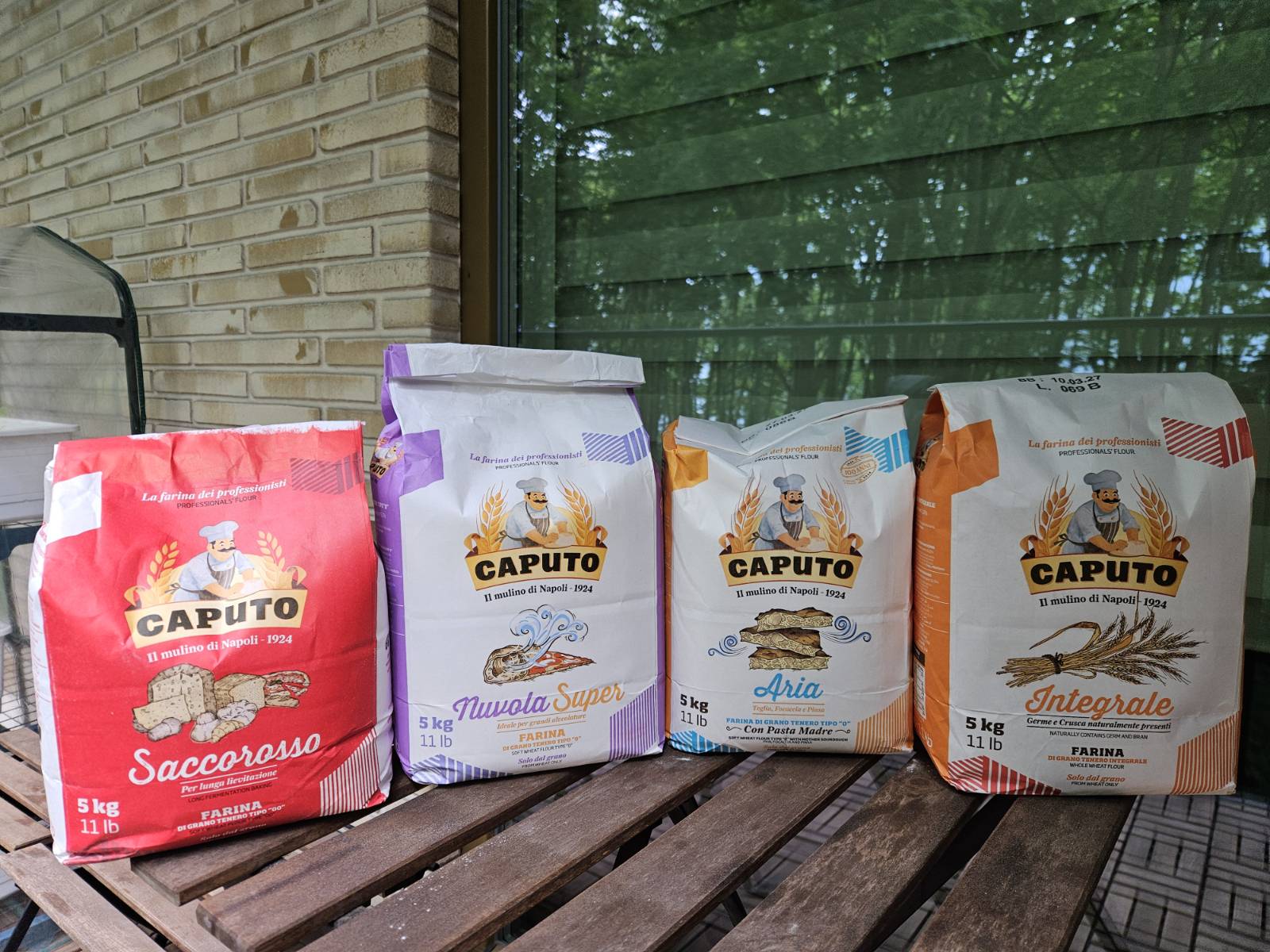
For me, flour is not a label decision. It is a dough behavior decision. What I care about is much more specific: protein, W, sometimes P/L, how the flour was milled, how much water it can actually carry, how quickly it loosens up, whether it fits room temperature work or cold fermentation, and whether I am making pizza, burger buns, Roman pizza, or a sourdough loaf. The more I bake, the less patience I have for labels that pretend to settle those questions with one word.
That gets even messier once you cross borders. Bread flour in one country does not automatically map cleanly onto strong flour in another, and neither of them maps cleanly onto a random supermarket bag somewhere else. Even all-purpose can cover a surprisingly wide range depending on the producer. That is one reason I have become much less impressed by flour labels and much more interested in flour behavior.
What I Actually Need To Know
If I strip the whole thing down, there are a few questions that help me much more than any retail label ever has. What am I making? What texture do I want? How long is the process? Is it room temperature or cold? How much water am I realistically trying to carry? Those questions do not solve everything, but they move the flour decision into the real world.
That is also why strong flour does not impress me much on its own. It sounds more technical than bread flour, but it still hides a lot. Usually people mean one of a few things. The flour can take more water. It can build and hold a stronger gluten network. It can survive a longer fermentation window. It can carry a richer dough. All of that is useful, and none of it is precise enough on its own. Strong for which product? Strong for what hydration? Strong compared to what? Strong for room temperature, or strong for a dough that will spend a long window in cold storage?
In other words, the label stops too early. Use bread flour stops too early. Use strong flour stops too early. The answer sounds complete before the real process questions have even started.
Why W Matters, And Why It Is Not Enough
This is where W becomes useful. Not because it tells the whole truth, but because it is one of the clearest shared technical reference points many bakers have access to. If someone tells me only strong flour, I still have to guess what they mean. If they tell me the flour sits around W 260/280 or W 320/340, I can at least orient myself. That does not solve everything, but it is a much better start.
I think it is important to say this clearly because otherwise the article can sound contradictory. I am not arguing that W is meaningless. I am arguing that W is useful as an orientation tool, not as a complete explanation of flour behavior. That is a big difference.
Take Caputo. Inside one brand you can move from something like W 170/190 all the way up to W 380/400, depending on the product. That is not a small difference, and it is not something a label like use Caputo can solve.
If you look at just a short slice of the Caputo range, the point becomes obvious:
| FLOUR | PROTEIN | W | WHAT IT SUGGESTS |
|---|---|---|---|
| Caputo Integrale | 13% | 170/190 | whole grain behavior, very different handling picture |
| Caputo Classica | 12% | 220/240 | shorter and lighter white dough use |
| Caputo Pizzeria | 12.50% | 260/280 | classic pizza territory |
| Caputo Saccorosso | 13% | 300/320 | longer fermentation and stronger doughs |
| Caputo Nuvola Super | 13.50% | 320/340 | more aggressive volume and higher-demand pizza/focaccia work |
| Caputo Americana Super | 15.25% | 380/400 | very strong flour, completely different load-bearing range |
One brand already tells you that flour choice is not a one-word problem.
Petra gets even more interesting. Some Petra flours publish W and P/L clearly. Some higher-fiber Petra flours are basically telling you that the usual alveograph language is not the best way to understand the flour at all. That matters, because people love reducing everything to one number. Even the producer can sometimes be telling you that one number is not the right summary.
A short Petra sample already shows a different kind of range:
| FLOUR | PROTEIN | W | WHAT IT SUGGESTS |
|---|---|---|---|
| Petra 0 HP | 12.5 g | 240-260 | moderate strength, pizza-oriented, hydration not infinite |
| Petra 5010 | 12.3-13.0% | 300-340 | pinsa / crisp pizza territory, rice and wheat blend, high absorption |
| Petra 5063 | 12.7 g | 260-280 | pizza range with a cleaner hydration window |
| Petra 5037 | 13.5 g | 300-340 | stronger bread and higher hydration use |
| Petra 0102 HP | 13.5 g | 320-340 | stronger panificazione / pizza range with longer process support |
| Petra 0101 HP | 13.2 g | 390-420 | very strong line for much heavier process demands |
| Petra 6384 | 14.5-15.5% | 370-390 | very strong pastry / grandi lievitati range, also LM refresh context |
And then Petra does something even more useful. In parts of the range, especially higher-fiber flours, the producer is basically telling you that W and P/L are not always the smartest language for reading the flour. That matters. It means the flour conversation cannot always be collapsed into one strength number without losing the actual behavior.
That is exactly why I wanted this article to exist. The moment you look at real flour ranges, the shortcut starts falling apart. Bread flour stops too early. Use Caputo stops too early. Use strong flour stops too early.
Protein Matters, But Not By Itself
Protein matters. It absolutely matters. But protein is not the whole picture, and I think a lot of bakers stop too early here as well. They ask for protein as if that settles everything. Two flours can sit in the same rough protein zone and still behave differently depending on strength, extensibility, extraction, fiber, milling, enzyme activity, and how the dough is fermented.
That is why I do not like the false confidence of phrases like just use a high protein flour, just use strong flour, or just use bread flour. Those are not fake answers. They are incomplete answers, and incomplete answers are often worse than no answer at all because they sound finished.
Hydration Is Not A Flex
Hydration is another place where people like to flex. There is a certain kind of baking culture that treats high hydration like proof of seriousness. If the number is big enough, the dough must be better. If the dough is harder to handle, that must mean the baker is doing something advanced. I do not buy that. Hydration is not a badge, not a personality trait, and not a moral achievement. It is a process decision.
The right question is not how high can I push it. The right question is what does this flour, this process, and this product actually need. Based on my own baking, 60–65% is still a very readable zone in a lot of systems. 70% is not crazy, but it is already more demanding depending on the flour. Once you move into 75% and beyond, the handling picture changes much faster. The dough gets softer, stickier, more sensitive, and much less forgiving. That does not make it wrong. It just means you are asking more from the flour and more from yourself. From that point onward, you are not really talking only about a hydration number anymore. You are talking about the technical skill required to develop, move, shape, and read a much wetter dough without wrecking it.
This is also where beginners get punished by oversimplified advice. If you are still learning how dough behaves, copying a hydration number too literally can push you into trouble very quickly. In my own view, there is often nothing wrong with starting a little lower on water, seeing how the dough actually takes it, and only then deciding whether it wants more. That is not me claiming some universal rule. It is a practical beginner-friendly way of avoiding the mistake of forcing a dough into a number before you can even read what it is doing.
Higher hydration can absolutely be the right move in some products. Ciabatta is an obvious example. Some Roman pizza styles are another. Focaccia can justify it. Some country loaves can justify it. But the water is not the whole story. Higher hydration also changes the flour you need, the way you mix, the way the dough develops, the way fermentation shows itself, the way you shape, and the way the dough recovers from handling. In many cases, yes, the higher you push hydration, the more the flour has to carry. But even that sentence needs care, because some doughs can survive higher water not just because the flour is stronger on paper, but because the whole system around it is better built. Mixing, fermentation control, dough temperature, and handling quality can all support or destroy what the flour could have carried in theory.
Water addition itself is part of that system too. It is not always just one clean dump at the start. How much goes in first, how much is held back, whether more is added later, and how the dough responds to that change all matter. Even something like bassinage, which people sometimes mention casually, only means something inside a bigger mixing and temperature context.
There is also a half-joking line you hear from some bakers: the more water we can add, the bigger the profit. It is funny because there is truth hiding inside it. More water is not always just a craft decision. Sometimes there is an economic logic in the background too. That is another reason I do not automatically treat high hydration as proof of purity or skill.
Process Changes What The Flour Needs To Do
This is where fermentation starts to matter much more than the flour label suggests. The same flour may work very differently in different process structures. That is especially obvious with pizza dough. People say cold ferment it overnight as if that were one clean instruction. It is not. Do you bulk ferment first and split later? Do you split into balls early and cold ferment them as balls? Do you keep a long bulk at room temperature and only then divide? How long does the dough rest after dividing? Those are not small differences. They are different process architectures, and the flour decision sits inside that architecture.
The same goes for mixing. A time number on its own does not tell me much. Thirty minutes in one mixer is not the same thing as thirty minutes in another. Machine power, bowl geometry, speed setting, dough size, water temperature, room temperature, and target dough temperature all change what that time actually means. This is another reason I am wary of recipe language that sounds exact but leaves the real variables hidden.
That is also why cold fermentation keeps bothering me when people push it too casually. Sometimes it is exactly the right tool. Sometimes it helps with flavor. Sometimes it helps with timing. Sometimes it helps with the feel of the dough and the workflow. But I think too many bakers bring cold fermentation into a dough before they have asked the more important question: why is this process here at all, and what should it actually give me?
This matters in a very practical way. Not every good dough needs an overnight cold step. Not every pizza dough gets better just because you extended the schedule. Not every bread needs a more complicated fermentation path. If the product can already hit the texture, flavor, and handling profile you want at room temperature or in a shorter controlled window, then adding cold is not automatically an upgrade. It may just be more moving parts.
The longer you make the process, the more failure points you create. That is not philosophy. That is just systems thinking. More time means more variables. More variables mean more ways to lose control. That is one reason I do not like treating cold fermentation as some automatic badge of seriousness. It is a tool. If you cannot explain why you are using it, there is a good chance you do not need it yet.
This is where my own fridge became a reality check. I do not have some fantasy lab fridge at home. I have a real home fridge. Once I started measuring it properly with an Inkbird IBS-TH2 Plus Bluetooth thermometer and app logging, the picture became much less romantic. The fridge was not one stable number. It moved. It could go colder than useful. It was not the kind of neat controlled cold environment that recipe language often assumes.
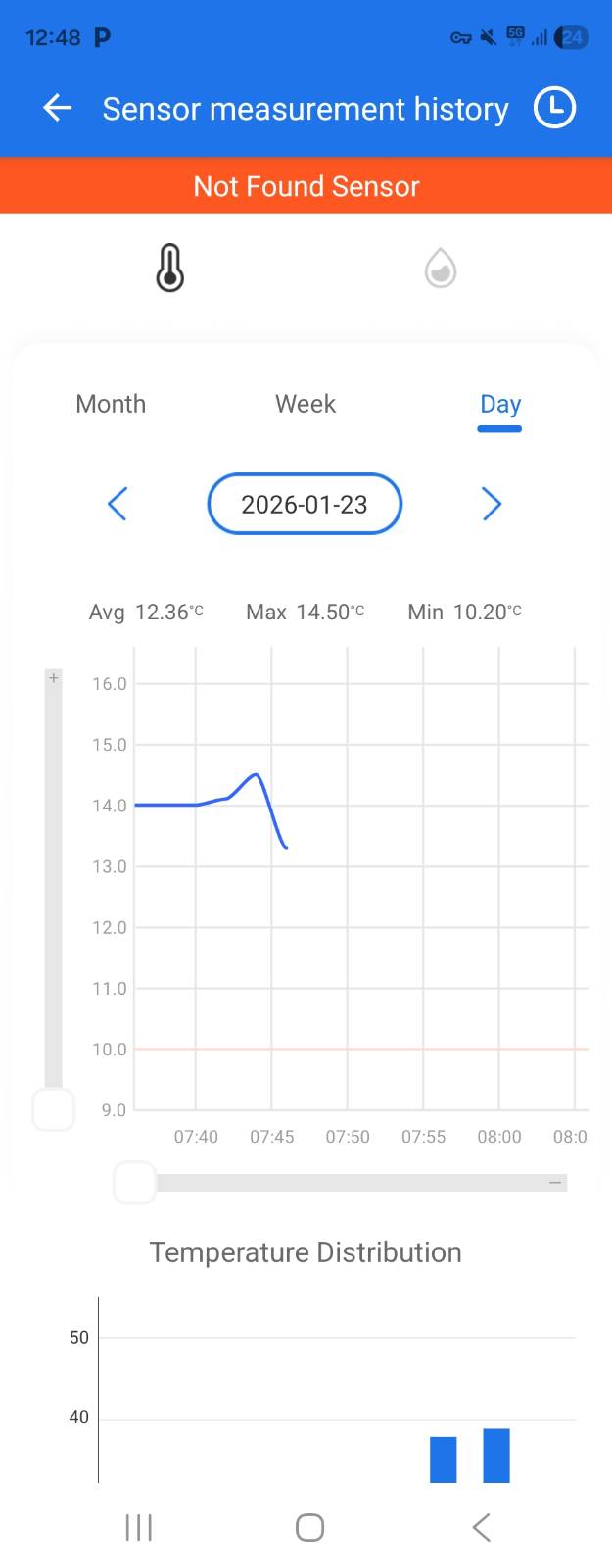
That changes everything. If your cold is unstable, or just too aggressive, then your process is not really controlled anymore. It starts turning into something closer to a bingo machine than a managed fermentation system. That is why cold ferment it overnight also stops too early. Without time and temperature, it is not a serious instruction. It is just a compressed assumption.
Flour Is Also Taste
Another thing I think home bakers should get comfortable with much earlier is that one flour does not need to solve everything. In many cases, it should not. Pizza, burger buns, Roman pizza, sourdough loaves, and richer doughs do not all ask for the same exact flour behavior. Why would they? If you think professionals are making every pizza and every bread from the same single flour bag, think again.
Flour mixing is normal. Flour blending is normal. Adjusting flour to suit a product is normal. That is not cheating. That is baking. The final result is what should drive the choice. Do you want crispness, stretch, more chew, more softness, more flavor, easier handling, more structure, or more extensibility? If the goal changes, the flour can change. The blend can change. The hydration can change. The fermentation can change. That is what real flour choice looks like.
This is one place where I think home bakers often underestimate what professionals actually do. People talk as if a serious baker picks one sacred flour and stays loyal to it forever. I do not think that is a very honest picture. If you are making pizza, burger buns, Roman pizza, and sourdough bread, why would you expect one flour to behave ideally in all of those products? Sometimes the answer is a different flour. Sometimes the answer is a blend. Sometimes the answer is the same flour with a different hydration and a different process.
Burger buns are a good example. They ask different things than a lean sourdough loaf. Roman pizza asks different things than a standard round pizza. A lighter rye-adjacent loaf is not the same thing as a strong wheat dough. The flour question changes because the product changes.
There is also a more sensory side to this that I do not want to leave out. Flour is not just strength. Flour is taste. Flour is smell. Flour is part of the final character of the product. I use Petra 5010 for burger buns for exactly that reason. You open the bag and the smell is already different. The flour has its own identity before the dough is even mixed. That matters to me, because the final product is not just about structure. It is about whether the bun actually tastes like something worth eating.
Petra 6384 sits on the other end of the range for me. It is one of those flours that immediately tells you you are no longer in generic supermarket territory. The specs already say that, but the bigger point is what kind of work it belongs to. It is built for much heavier process demands. That alone should make any honest baker stop and think before pretending one word like bread flour can cover both ends of this spectrum.
Caputo Tipo 1 gave me a different version of the same lesson. I ended up ordering it by mistake instead of another flour, and it turned out to be unbelievably good for a thin, crisp pizza. That is one more reason I no longer think flour choice can be reduced to a label or a generic category. Sometimes the right flour for the product is not the one you expected. Sometimes the flour that teaches you the most is the one you did not even mean to buy.
Summary
If I had to reduce the whole article to one practical conclusion, it would be this: flour labels are starting points, not answers. Bread flour is not an answer. Strong flour is not an answer. All-purpose is not an answer. A hydration number is not an answer either. They are placeholders until the real questions begin.
Those questions are not glamorous, but they are useful. What are you making? What texture do you want? How long is the process? Is it room temperature or cold? Is your cold stable or not? Are you looking for easier handling, more extensibility, more structure, more chew, or more openness? Once you start there, the flour question becomes much easier to read honestly.
That is the more honest frame I want to keep pushing — the same one I started the series with in Sourdough Is Not a Formula. The flour question is never just about flour. It is about flour inside a system. Once you see it that way, a lot of internet advice stops looking complete, and a lot of baking disappointment becomes much easier to explain. Use bread flour stops too early. Use strong flour stops too early. Cold ferment it overnight stops too early.
The better question is not "is this bread flour". The better question is "what do I want this dough to do, and can this flour and this hydration actually carry it".